
Ocala prepares for population growth with Vision 2050 plan
The community-driven blueprint aims to shape growth, connectivity and vibrant neighborhoods through mid-century.
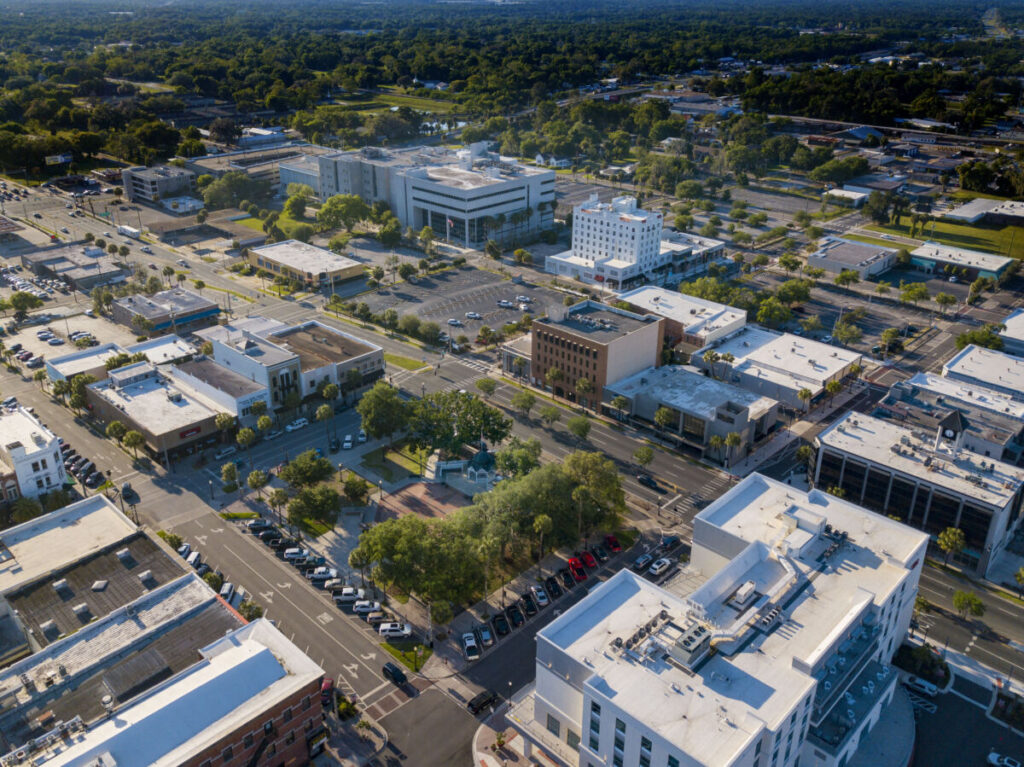
Ocala prepares for population growth with Vision 2050 plan
The Ocala City Council reviewed the draft Vision 2050 document during a recent session, outlining strategies to guide the city’s growth, development and quality of life over the next quarter century as its population increases.
Ocala’s Planning Director Aubrey Hale led the Feb. 10 presentation, highlighting the scale of expected change.
“One of the things that you can also look at is our population. For our population projections for 2050, it indicates that our population will grow by nearly 31% by the year 2050. That’s based on our current 2024 population estimates, which means our city residents within our city limits would be almost about 92,000,” she said.
The draft plan serves as an update and refinement to the community-driven Ocala 2035 Vision, which was launched in April 2010 amid the economic downturn and produced the statement: “Ocala is a great place to live, play and prosper.”
The council took no formal action at the work session. The draft Vision 2050 document and related materials are available on the city’s website. Residents can review the full plan and provide feedback as the city moves toward formal adoption.
Hale emphasized the strong foundation from the earlier effort.
“Another key element of the 2035 was its community-driven process. A lot of outreach happened, and there was even one that happened on the square. We got a lot of information from the public during that process, and this became our basis on how we approached 2050 as well… we reached, ultimately, over 1,000 people during this process,” Hale said.
Vision 2050 was shaped through four community-wide summits, 23 staff-led outreach sessions with strategic groups and city departments, online surveys and focus groups, reaching more than 1,000 residents. Primary consultant Kimley-Horn led the project, with support from Urban3, which provided land-value economics and evidence-based community design analysis.
According to the Vision 2050 draft document, Urban3’s findings showed that about 11% of properties within city limits are vacant or undeveloped. The analysis also demonstrated that mixed-use developments generate significantly higher tax revenue per acre than traditional commercial properties (up to $9.4 million per acre in some downtown examples compared to roughly $400,000 for a typical large-format retail site). Taxable properties make up 77% citywide, though the downtown Community Redevelopment Area has a higher share of exempt properties at 53%.
The plan organizes priorities around four building blocks: Land Use and Housing, Mobility and Connectivity, Public and Open Spaces, and Gateways. These inform citywide initiatives such as updating the Unified Land Development Code (last major revision in the mid-1980s), incentivizing infill redevelopment, expanding transit and complete streets with pedestrian safety features, updating the Recreation and Parks Master Plan (including identifying regional sportsplex locations) and creating a citywide gateway plan with wayfinding and design guidelines.
Four focus areas receive targeted strategies:
- East Ocala: Strengthening State Road 40 as a key corridor connecting downtown to natural and cultural assets (Silver Springs, Ocala National Forest, Appleton Museum of Art), promoting mixed-use nodes, accessory dwelling units and a potential Northeast Regional Park.
- High-Intensity Central Core: Recalibrating Vision 2035 successes with new catalytic sites, expanded connections to the hospital district and efforts to reduce SR 40 as a barrier through collaboration with the Florida Department of Transportation.
- West Ocala: Centered on Dr. Martin Luther King Ave. and including sites such as the Mary Sue Rich Community Center at Reed Place; priorities include expanding the Heritage Trail, addressing grocery access as a high-priority need within five years and leveraging West Ocala CRA tools.
- Airport: Industrial-focused with emphasis on activating the Airport Industrial Park, enhancing connectivity to SR 40 and extending fixed-route SunTran service to support tourism and economic activity.
During the work session, Hale presented a QR code through a PowerPoint presentation that aims to make the Vision 2050 draft document easily accessible and updatable.

“This is a dynamic QR code, so it’ll always be up to date. If somebody prints this off and they want to hand it off to somebody else, they can always take a snap… and it will take you to a website that has all the information pertaining to the vision,” Hale said.
Key action items discussed include collecting council feedback for quick adoption of the Vision 2050 document, beginning amendments to the Comprehensive Plan, launching the Unified Land Development Code update project, revising the Tuscawilla Park master plan and other aging study-area plans and providing detailed data on existing green and open space (public parks, conservation areas and designated recreation areas) to address public concerns about development and vacant land.
To learn more, go to ocalafl.gov/government/city-departments-a-h/growth-management/planning/vision-2050

Support community journalism
The first goal of the Ocala Gazette is to deliver trustworthy local journalism so corruption, misinformation and abuse are not hidden from the public or unchallenged.